
Should Youth Athletes Lift Weights? Here's What Actually Matters
Is weightlifting safe for young athletes? Learn how strength training improves performance, reduces injury risk, and supports long-term development.
“Lifting stunts growth.” “They’re too young for the weight room.” “Just let them play their sport.”
You’ve probably heard all of it. And none of it is true.
The real problem isn’t lifting — it’s misinformation
Most parents aren’t avoiding strength training because they don’t care. They’re avoiding it because they’ve been told it’s dangerous.
But the reality? Avoiding the weight room is what’s putting young athletes at risk.
The “stunted growth” myth needs to go
This is the biggest concern, and it’s outdated.
Strength training, when done correctly:
- Does not stunt growth
- Does not damage growth plates
- Is supported by major sports medicine organizations
What actually causes issues?
- Repetitive overuse from sports
- Poor movement mechanics
- High intensity without physical preparation
The weight room done right protects against all of that.
What strength training actually does for young athletes
This isn’t theory. It’s consistent across research.
1. Reduces injury risk
Stronger muscles and connective tissue absorb force better. Better mechanics = less stress on joints.
2. Improves performance
Speed, power, and agility all improve with strength. Stronger athletes run faster, jump higher, and change direction better.
3. Builds long-term durability
Youth is where the foundation is built. Athletes who skip strength training often break down later and struggle with higher demands.
4. Supports bone development
Bone adapts to load. This is one of the most important windows to build long-term bone strength.
So when should they start?
Earlier than most people think. Kids as young as 7–8 years old can begin structured training if it’s done correctly.
At that stage:
- Focus is movement quality
- Not weight
- Not max lifts
As they grow, load increases, structure improves, and strength develops progressively.
The real risk is being unprepared
Most injuries don’t happen in the weight room. They happen on the field, on the court, during competition.
Why? Because athletes are asked to sprint, cut, jump, and absorb force without ever building the strength to handle it.
What good youth training actually looks like
This is where most programs fail. A proper system includes:
- Movement quality first
- Foundational patterns (squat, hinge, push, pull, brace)
- Progressive loading (age-appropriate)
- Sport-specific application
- Qualified coaching
What it’s not: maxing out early, copying adult programs, skipping fundamentals.
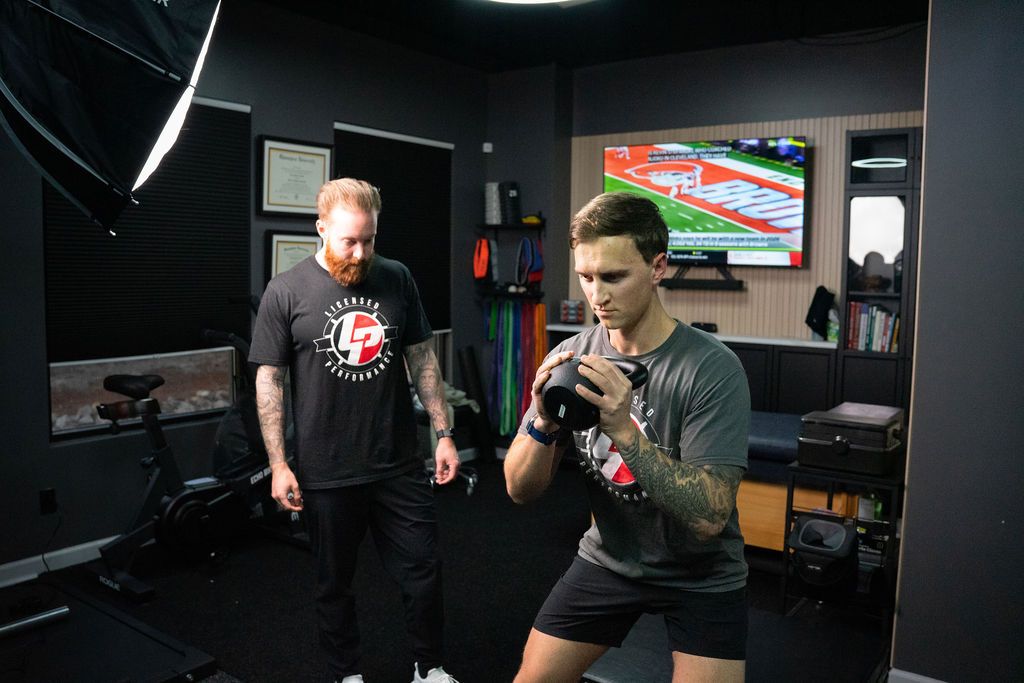
The Licensed Performance approach
We don’t just “add weights.” We build athletes.
- Teach movement first
- Build strength progressively
- Develop control under load
- Transfer it to sport performance
That’s how you create athletes who are strong, durable, and confident.
The bottom line
Keeping a young athlete out of the weight room doesn’t protect them. It leaves them unprepared.
Strength training done right is one of the best things you can give them. If you want your athlete to stay healthy, perform better, and develop long-term — start with the right system.